- English
- French
- German
- Portuguese
- Spanish
- Russian
- Japanese
- Korean
- Arabic
- Greek
- German
- Turkish
- Italian
- Danish
- Romanian
- Indonesian
- Czech
- Afrikaans
- Swedish
- Polish
- Basque
- Catalan
- Esperanto
- Hindi
- Lao
- Albanian
- Amharic
- Armenian
- Azerbaijani
- Belarusian
- Bengali
- Bosnian
- Bulgarian
- Cebuano
- Chichewa
- Corsican
- Croatian
- Dutch
- Estonian
- Filipino
- Finnish
- Frisian
- Galician
- Georgian
- Gujarati
- Haitian
- Hausa
- Hawaiian
- Hebrew
- Hmong
- Hungarian
- Icelandic
- Igbo
- Javanese
- Kannada
- Kazakh
- Khmer
- Kurdish
- Kyrgyz
- Latin
- Latvian
- Lithuanian
- Luxembou..
- Macedonian
- Malagasy
- Malay
- Malayalam
- Maltese
- Maori
- Marathi
- Mongolian
- Burmese
- Nepali
- Norwegian
- Pashto
- Persian
- Punjabi
- Serbian
- Sesotho
- Sinhala
- Slovak
- Slovenian
- Somali
- Samoan
- Scots Gaelic
- Shona
- Sindhi
- Sundanese
- Swahili
- Tajik
- Tamil
- Telugu
- Thai
- Ukrainian
- Urdu
- Uzbek
- Vietnamese
- Welsh
- Xhosa
- Yiddish
- Yoruba
- Zulu
The Varieties of Cast Iron Butterfly Valves in Industrial Applications
In many piping systems worldwide, cast iron butterfly valves are the heroes of industrial flow control. These valves are versatile for water treatment, HVAC, power production, and chemical processing. The cast iron wafer butterfly valve, along with its lug and flanged cousins, is important in this family. Each version addresses various industrial issues with unique structural, installation, and operational features. Understanding these distinctions helps procurement teams match valve configurations to system needs while balancing performance and budget.
Understanding Cast Iron Wafer Butterfly Valves
Core Design and Operating Principles
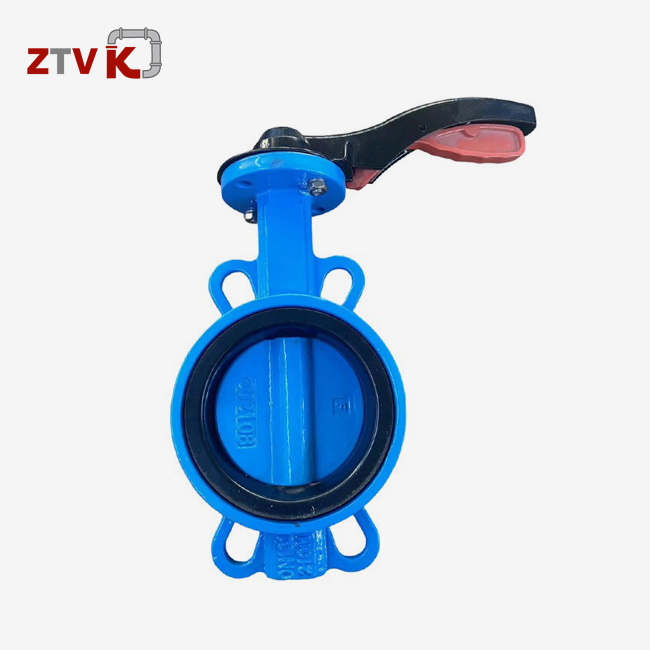
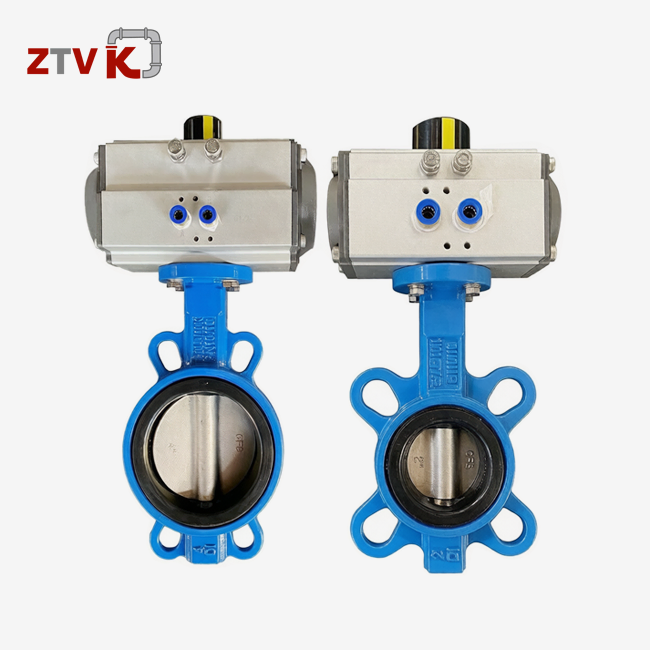
A cast iron wafer butterfly valve regulates or stops media flow via the quarter-turn rotating motion of a circular disc perpendicular to the flow. Bolts through the pipeline flanges compress against the valve body to secure it. Without valve flanges, this design has a very small installation footprint. Based on use, the disc pivots on a stem via the valve body coupled to human levers, gear operators, or automated actuators.
Material Composition and Performance Impact
Modern valve bodies are made of ductile iron (GGG40 per ASTM A536) instead of grey cast iron. This material greatly improves tensile strength and impact resistance, especially in water hammer or thermal cycling systems. Ductile iron construction withstands PN16 (Class 150) pressures and maintains structural integrity from -29°C to +120°C. The principal sealing contact is the robust seat, made of NBR, EPDM, Viton, or silicone rubber, depending on chemical compatibility and temperature.
Standard Specifications and Industrial Applications
These valves meet varying flow needs in pipeline systems from DN50 to DN2400 (NPS 1¼ to NPS 96) across various industries. Epoxy-coated ductile iron protects disc and trim components, but stainless steel (SS304, SS316) or duplex steel upgrades are suitable for hostile media conditions. Stems made of SS316, SS304, SS420, or SS416 resist corrosion and last thousands of cycles. These valves function well in water distribution networks, HVAC systems, food processing lines, pharmaceutical facilities, and desalination plants. API 609, DIN, ASME, ISO, ANSI, BS EN, and AWWA design standards enable global interoperability and regulatory compliance.
Comparing Types: Wafer vs. Lug and Other Butterfly Valves
Structural Differences and Installation Requirements
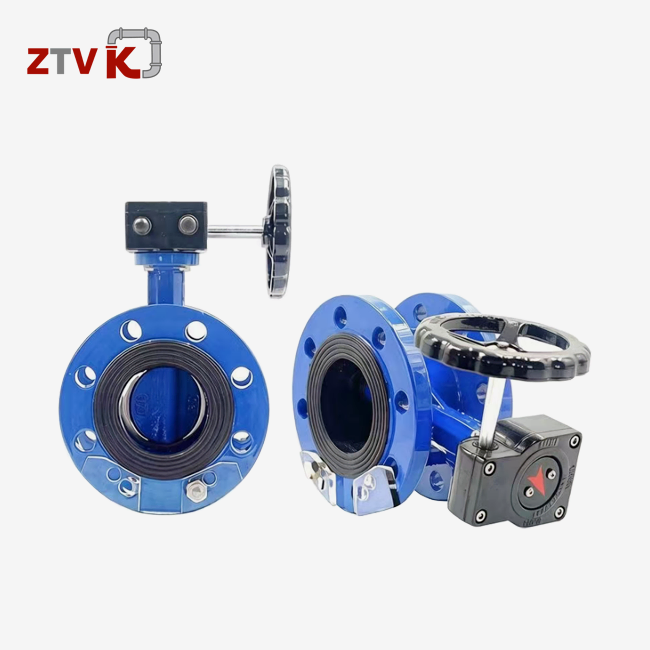
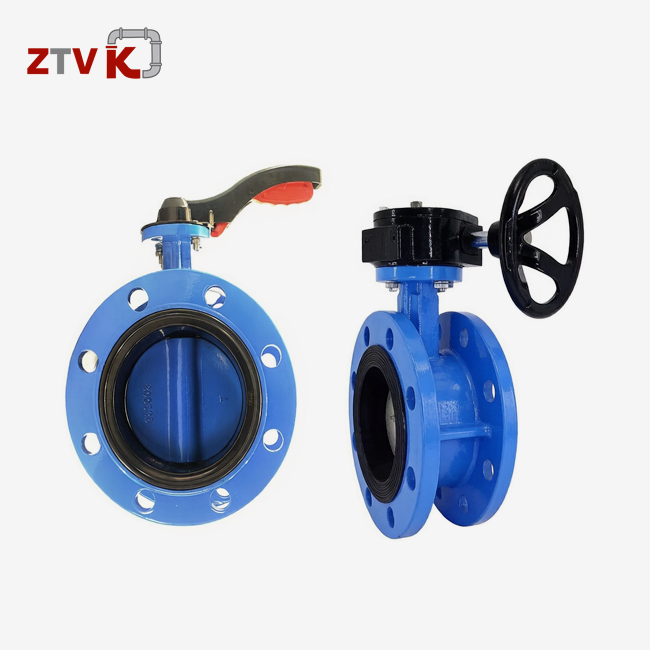
A cast iron wafer butterfly valve requires flange bolts for positional stability and cannot be used in dead-end service or pipeline termination. Lug-style valve bodies have threaded inserts for bolt attachment to each flange. For downstream maintenance, a single flange can be removed without affecting the valve assembly. Flanged butterfly valves handle dead-end service without piping support because their bodies have integral flanges cast or welded to them. The wafer design is the lightest and cheapest, although lug and flanged variants give installation flexibility that justifies their higher initial expenditure in certain applications.
Material Properties and Pressure Capabilities
Standard cast iron butterfly valves have ductile iron bodies rated to PN16 (150 PSI) for low-to-medium pressure applications. Stainless steel butterfly valves can handle corrosive environments and higher pressures, but they cost more. Elastomer seats limit temperature exposure regardless of body material—NBR seats limit operation to 80°C, whereas EPDM extends it to 120°C. Viton seats withstand harsh chemicals but cost more. Understanding these material constraints helps procurement teams avoid over-specifying valve components, which raises project costs without improving operations.
Durability and Lifecycle Expectations
Modern double-eccentric disc butterfly valves can last over 50,000 cycles if properly maintained. The oblique sealing system lowers friction, helping seat surfaces last longer between maintenance visits. When properly coated, cast iron bodies resist external corrosion, while internal media qualities increase long-term endurance. Regular seat, stem packing, and disc alignment inspections prevent small faults from becoming system breakdowns. Abrasive or chemically aggressive media reduce valve service life correspondingly, while clean water valves typically last 15-20 years.
How to Choose the Right Cast Iron Wafer Butterfly Valve for Your Industrial Needs
Defining Technical Criteria
Operating parameters such as maximum flow rate, system pressure (both operating and test pressure), temperature range, and media characteristics are defined before procurement. The valve must handle peak flow without causing a pressure drop, which raises pumping costs over time. For surge conditions, pressure ratings should contain safety margins above normal operating pressure. In outdoor installations with seasonal extremes, media and ambient temperatures must be considered. Chemical compatibility reduces premature failure—water systems tolerate inexpensive EPDM seats, whereas some chemical applications require Viton despite greater costs.
Matching Valve Types to Specific Applications
Wafer designs, with standardized flanges and simple piping layouts, are cost-effective and compact for water treatment and municipal distribution systems. Commercial HVAC systems choose wafer valves for space-constrained mechanical rooms. For maintenance accessibility, power plants and chemical processing facilities use lug-style valves to service downstream equipment without depressurization. Desalination plants need corrosion-resistant trim and premium seat compositions for high temperatures and salinity. Crevice-free construction and FDA or EHMR compliance paperwork are needed for food and pharmaceutical applications.
Cost Versus Performance Evaluation
Beyond purchase price, total cost of ownership includes installation labor, pressure drop energy usage, maintenance frequency, spare parts availability, and replacement timing. A valve with 10% lower pressure drop decreases pumping expenses during its lifetime, justifying a 30% greater initial expenditure. Our 50-kilometer distance from Tianjin Port allows three-to-seven-day delivery for typical sizes (DN50-DN600) from our 2,000-unit inventory. Non-standard specs take 15-25 days to produce, although rush requests are prioritized. Understanding these logistics helps procurement professionals estimate project durations and avoid urgent expediting expenditures.
Installation, Maintenance, and Performance Optimization
Step-by-Step Installation Guidelines
Before installing a cast iron wafer butterfly valve, clean and align the flange faces. To avoid bolt compression seat damage, the disc must be fully open during installation. Technicians should apply even torque in a star pattern to all bolts, progressively tightening to prescribed values rather than sequentially fastening them. A projecting elastomer seat face acts as an integrated gasket in most wafer butterfly valves; therefore, adding separate gaskets might cause sealing issues or structural damage from bolt stress. Particle collection near the bottom pivot point might damage seating surfaces or limit disc rotation; hence, a horizontal stem arrangement is best for suspended solids applications.
Routine Inspection and Preventive Maintenance
Visually inspect exterior components, especially stem packing for media leakage and actuator mounting hardware for secure connection, during scheduled maintenance. Complete valve open-close cycles show smooth disc spinning without binding or resistance. Pressure testing during shutdown intervals detects tiny leaks before it causes operational issues. Water systems need little cleaning, but oil and chemical systems need flushing. Manufacturer-specified bearing lubrication is required annually for manually operated valves and more often for automated systems cycling repeatedly.
Performance Optimization Strategies
Monitoring pressure drop across the valve during normal operation provides baseline performance data for detecting seat wear or disc misalignment. Calibrating actuator location to match disc angle to flow rates optimises energy efficiency in flow control applications throughout demand circumstances. Installing downstream pressure gauges allows real-time system monitoring, alerting operators to issues before valve failure. Advanced installations use smart positioners to send diagnostic data to centralized monitoring systems for predictive maintenance and reduced downtime. These optimization methods extend valve service life and lower system-wide operational expenses.
Procurement Insights: Buying, Pricing, and Logistics
Sourcing Strategies and Supplier Relationships
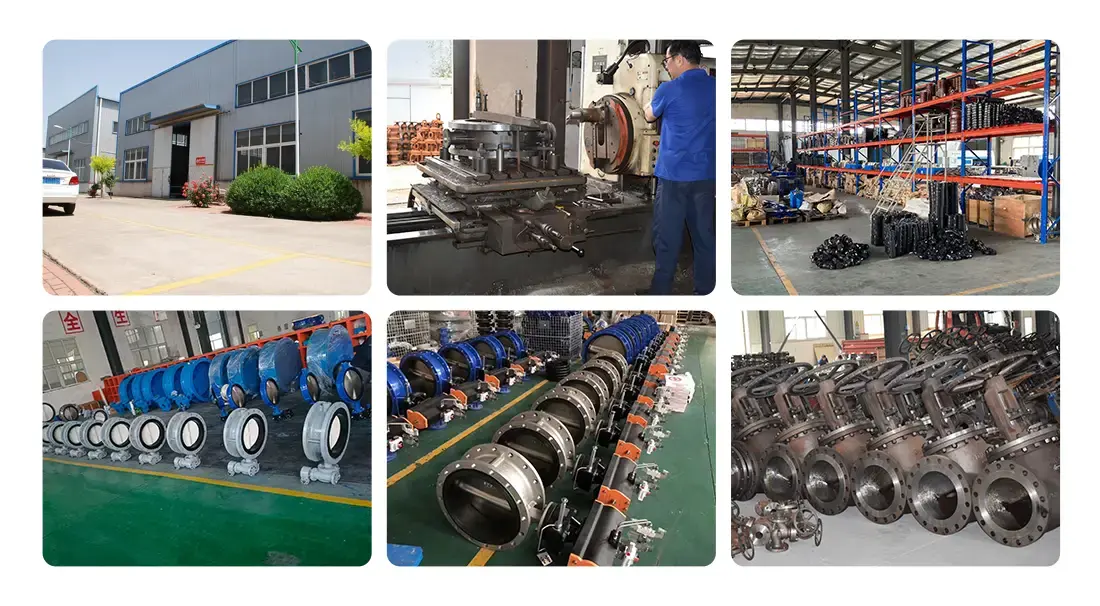
Industrial valve procurement involves two basic methods: using wholesalers that stock standard sizes or buying directly from manufacturers for bespoke specifications and volume purchases. Distributors offer instant availability and simpler ordering, albeit at a price due to inventory carrying costs. Direct manufacturer interaction works for OEM branding, non-standard setups, and high-volume orders when pricing discussions save money. Through our regional distributor network and project-specific customer contacts, we support both approaches. Modern CNC machining centers and large-diameter valve processing equipment allow our Tianjin Beichen manufacturing facility to produce standard catalog items and fully customized designs to customer drawings and specifications.
Understanding Cost Drivers and Lead Times
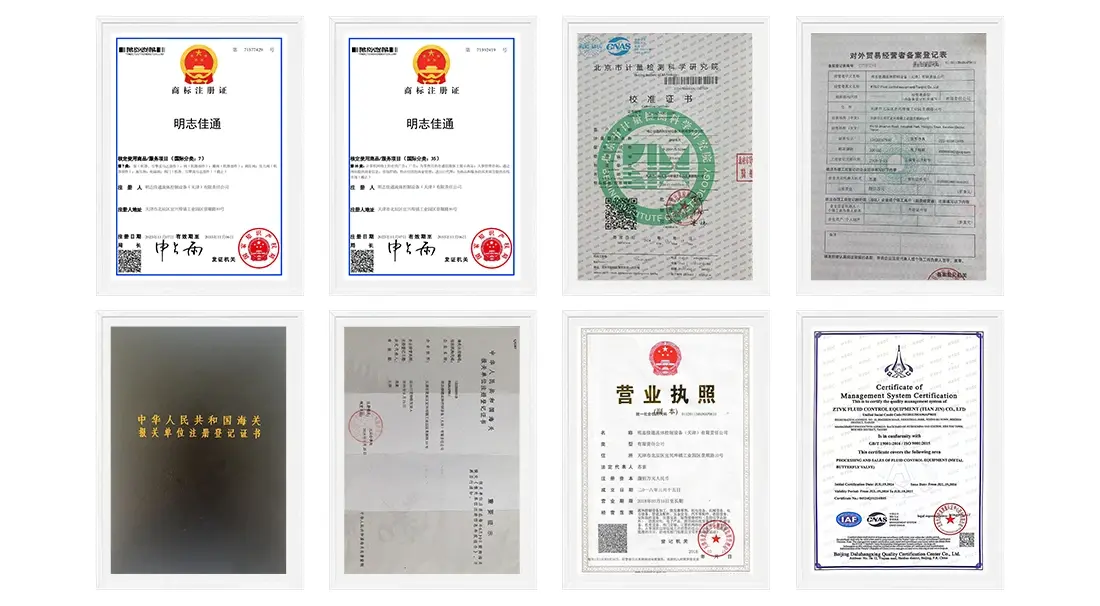
Valve cost depends on body material grade, seat compound, trim material upgrades, size range, and pressure rating. Automated actuation packages cost more than manual operators, but labor savings justify the expenditure. Responsible producers often pay for ISO 9001 quality management, material test reports, pressure test documentation, and CE marking. Standard configuration lead times rely on inventory availability, whereas custom orders depend on production scheduling. Standard models ship between 3-7 days after order confirmation, while customized specs take 15-25 days, depending on complexity. Rush order accommodation decreases delivery to seven to ten days for a 20% premium, convenient for urgent projects.
After-Sales Support and Replacement Parts
Long-term suppliers of products like cast iron wafer butterfly valves provide comprehensive after-sales service, unlike transactional merchants. Our 18-month warranty covers non-human-caused problems with free replacement, safeguarding consumers from manufacturing or material failures. Technical support includes installation videos, troubleshooting instructions, and application-specific engineering consulting beyond warranty periods. Seats, stem packing, and bearing assemblies are available throughout the valve's estimated service life, ensuring operational continuity. QR code scanning gives customers digital access to product files, test reports, and maintenance records, simplifying the quality management system and regulatory compliance audit paperwork.
Conclusion
Instead of choosing the cheapest butterfly valve arrangement, consider technical needs, installation constraints, and overall ownership costs. Cast iron wafer designs with standardized flange connections are cost-effective for space-limited installations, whereas lug and flanged variants give installation flexibility in maintenance-intensive situations. To avoid premature failure and project budget waste, material selection, balancing body structure, seat compounds, and trim modifications must match actual service conditions. Having thorough quality systems, verified conformity with international standards, and post-sale assistance from manufacturers positions industrial operations for long-term success. Understand these aspects to make informed procurement decisions that improve valve performance and reduce lifespan costs.
FAQ
Q1: Can wafer butterfly valves handle dead-end service applications?
Wafer valves generally prove unsuitable for dead-end service because they rely on compressive force from two opposing flanges for structural support and sealing integrity. Pipeline termination points lack this dual-flange configuration, making lug-style valves the technically appropriate choice where one flange side remains unsupported. Attempting wafer valve installation in a dead-end service risks seat damage from uneven loading and potential valve displacement under pressure.
Q2: What practical differences exist between grey iron and ductile iron bodies?
Grey cast iron (GG25) exhibits brittle characteristics suitable only for static, low-pressure applications without impact loading or thermal cycling. Ductile iron (GGG40) incorporates spheroidal graphite structures, providing substantially higher tensile strength and impact resistance, essential for systems experiencing water hammer or pressure fluctuations. Modern industrial applications almost universally specify ductile iron construction, reserving grey iron only for the most basic, low-stress installations.
Q3: How does seat material selection affect operating temperature limits?
The elastomer seat material establishes practical temperature boundaries regardless of body material capabilities—cast iron bodies tolerate high temperatures, but elastomer degradation limits actual service conditions. NBR seats restrict operation to approximately 80°C, EPDM extends this ceiling to 120°C, and Viton accommodates higher temperatures while offering superior chemical resistance. Exceeding these temperature limits causes seat hardening, loss of resilience, and eventual sealing failure.
Partner with ZTVK for Your Cast Iron Butterfly Valve Requirements
Industrial valve procurement demands suppliers demonstrating manufacturing excellence, technical expertise, and unwavering commitment to customer success. ZTVK combines these qualities through our Tianjin Beichen facility, where ISO 9001/ISO 14001/OHSAS 18001 certifications validate our quality management systems and operational discipline. Our 15-year manufacturing heritage focuses specifically on butterfly valve technology, developing deep expertise in design optimization and production efficiency. We maintain immediate availability of standard wafer butterfly valves from DN50 to DN600 with three-to-seven-day delivery, while our flexible production scheduling accommodates custom specifications within 15-25 days.
Our casting iron wafer butterfly valve supplier capabilities extend beyond standard catalog offerings to comprehensive OEM and ODM services, including custom branding, modified connection configurations, and specialized trim materials matching unique operating conditions. Our proximity to Tianjin Port—just 50 kilometers by land transport—streamlines international shipping through established partnerships with major carriers providing competitive FOB and CIF quotations. Technical support includes pre-sales engineering consultation, CAD drawings, installation guidance, and 18-month warranty protection, ensuring your confidence throughout project execution.
Procurement professionals seeking a reliable cast iron wafer butterfly valve manufacturer who understands the complexities of industrial applications are invited to contact our team at ktec86961886@163.com. We provide detailed quotations, technical specifications, and application guidance tailored to your specific requirements, supporting your success through quality products and responsive partnership.
References
1. American Water Works Association. (2019). Manual M49: Butterfly Valves: Torque, Head Loss, and Cavitation Analysis. Denver: AWWA Publications.
2. Nesbitt, B. (2011). Handbook of Valves and Actuators: Valves Manual International. Oxford: Butterworth-Heinemann Technical Publishers.
3. Zappe, R.W. (2004). Valve Selection Handbook: Engineering Fundamentals for Selecting the Right Valve Design for Every Industrial Flow Application (5th ed.). Houston: Gulf Publishing Company.
4. Lyons, J.L., & Askland, C.L. (2016). Lyons' Encyclopedia of Valves. New York: Van Nostrand Reinhold Engineering Press.
5. Smith, P., & Zappe, R.W. (2003). Valve Selection and Specification Guide. Research Triangle Park: ISA—The Instrumentation, Systems, and Automation Society.
6. British Valve and Actuator Association. (2018). Technical Reference Manual on Industrial Valve Applications and Selection Criteria. Banbury: BVAA Technical Committee Publications.
Send us your valve requirements and our team will provide professional solutions and fast quotations.
RELATED INDUSTRY KNOWLEDGE