- English
- French
- German
- Portuguese
- Spanish
- Russian
- Japanese
- Korean
- Arabic
- Greek
- German
- Turkish
- Italian
- Danish
- Romanian
- Indonesian
- Czech
- Afrikaans
- Swedish
- Polish
- Basque
- Catalan
- Esperanto
- Hindi
- Lao
- Albanian
- Amharic
- Armenian
- Azerbaijani
- Belarusian
- Bengali
- Bosnian
- Bulgarian
- Cebuano
- Chichewa
- Corsican
- Croatian
- Dutch
- Estonian
- Filipino
- Finnish
- Frisian
- Galician
- Georgian
- Gujarati
- Haitian
- Hausa
- Hawaiian
- Hebrew
- Hmong
- Hungarian
- Icelandic
- Igbo
- Javanese
- Kannada
- Kazakh
- Khmer
- Kurdish
- Kyrgyz
- Latin
- Latvian
- Lithuanian
- Luxembou..
- Macedonian
- Malagasy
- Malay
- Malayalam
- Maltese
- Maori
- Marathi
- Mongolian
- Burmese
- Nepali
- Norwegian
- Pashto
- Persian
- Punjabi
- Serbian
- Sesotho
- Sinhala
- Slovak
- Slovenian
- Somali
- Samoan
- Scots Gaelic
- Shona
- Sindhi
- Sundanese
- Swahili
- Tajik
- Tamil
- Telugu
- Thai
- Ukrainian
- Urdu
- Uzbek
- Vietnamese
- Welsh
- Xhosa
- Yiddish
- Yoruba
- Zulu
What is the general nominal pressure of irrigation butterfly valves?
Irrigation butterfly valves typically operate at nominal pressures of PN10 (145 PSI) and PN16 (232 PSI), which are the most common ratings for agricultural water systems. These pressure classifications align with ISO standards and cover the vast majority of irrigation applications, from drip systems to center pivot installations. The nominal pressure indicates the maximum safe working pressure at ambient temperatures, ensuring reliable flow control without compromising structural integrity or seal performance throughout seasonal operation.
Introduction
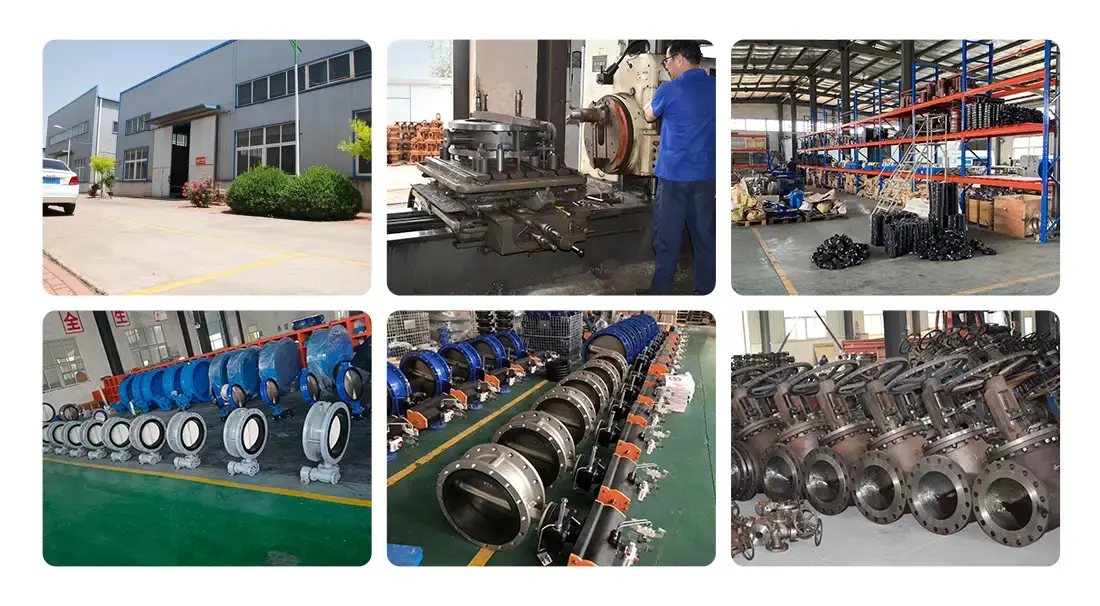
Agricultural infrastructure needs strong flow control tools to get water to a lot of land effectively. When purchasing managers look for irrigation butterfly valves for irrigation networks, knowing the pressure levels is more than just a technical detail; it has a direct effect on how long the system lasts, how safe it is to use, and the total cost of ownership. After 15 years of making things in Tianjin, we know that most failures in the field are caused by pressure numbers that don't match. This can be anything from seal degradation to catastrophic disc deformation.
This guide answers the most important question that dealers and engineering companies have: what nominal pressure should you give when looking for valves for irrigation projects? To help you make confident buying choices, we break down pressure classifications, material effects, and real-world application scenarios. It doesn't matter if you're in charge of a municipal water contract or selling equipment to agricultural cooperatives; this information will help you choose parts that meet both performance and cost requirements.
Understanding Nominal Pressure in Irrigation Butterfly Valves
Definition and Importance of PN Ratings
Nominal pressure (PN) is the highest working pressure that an irrigation butterfly valve body can handle at 20°C without breaking or leaking. This grade takes into account static pressure, short-lived surges, and material wear and tear over long periods of service. PN ratings, on the other hand, give a safe operational boundary that takes into account changing field conditions, while burst pressure tests the limits of catastrophic failure.
Recognized International Standards
ANSI B16.34 sets the rules for Class grades in North American markets, while ISO 7005-1 standardises PN classes around the world. Our factory is ISO9001 certified and makes valves that work with a number of different frameworks. This means that they can be easily used in projects that are controlled by different legal settings. In Europe, DIN standards are still commonly used in purchase documents, especially for water utility projects that need to be reliable for a long time, which supports a higher starting investment.
Common Pressure Classes in Irrigation
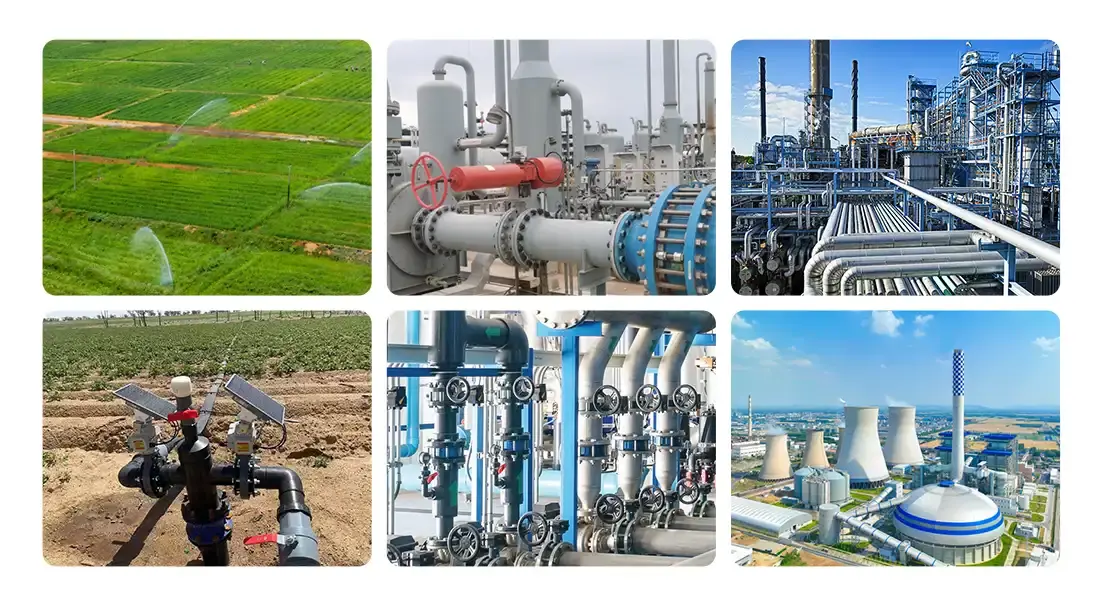
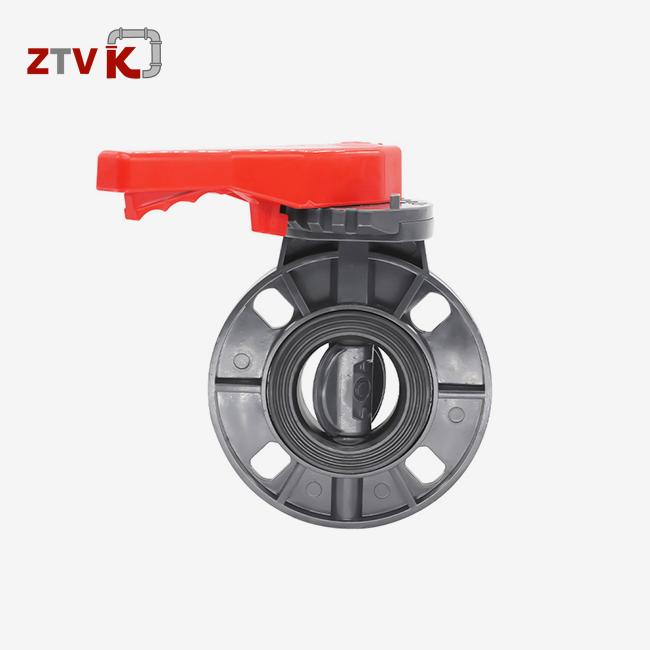
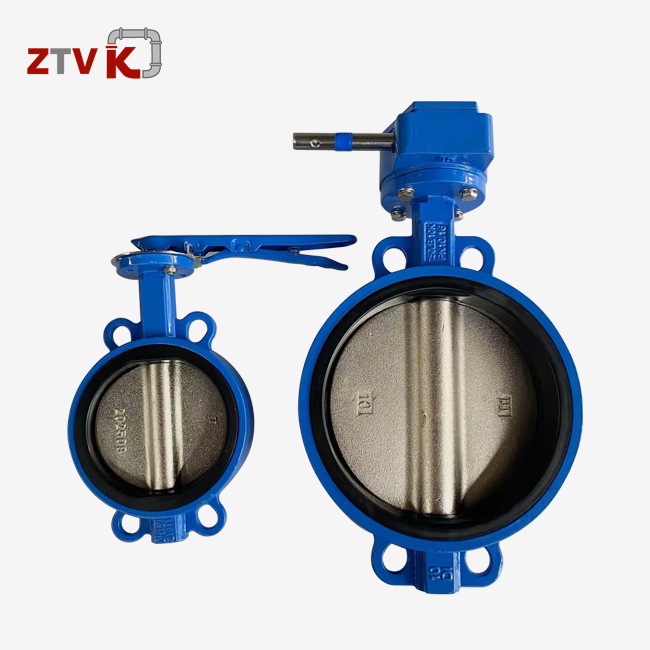
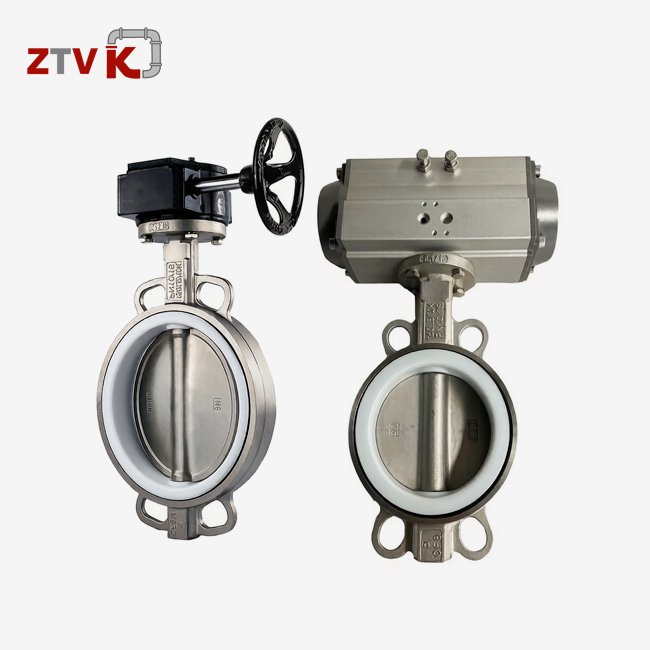
PN10 valves work well in low-pressure situations, like surface drip systems and gravity-fed networks, where the pressure doesn't go above 100 PSI. PN16 valves are used in pressurised systems, like spray arrays and pump-fed mainlines, where pressure spikes from water hammer or fast valve action can be dangerous. The sizes that ZTVK offers for both classes range from DN40 to DN1200, and the wafer-type links meet the standards for actuator compatibility set by ISO5211.
Typical Nominal Pressure Ratings for Irrigation Butterfly Valves — An Engineering Perspective
Pressure Categories Across Agricultural Systems
Low-pressure systems (below 145 PSI) are most common in drip irrigation layouts where emitters need controlled flow rather than high speed. Medium-pressure uses (145–232 PSI) are for travelling gun systems and center pivot setups that need higher inlet pressures because of changes in slope and friction loss. In farmland, high-pressure situations (above 232 PSI) are still rare, but they do happen at fertigation injection places, where chemical pumps create pressure zones in certain areas for the irrigation butterfly valve.
Material Influence on Pressure Tolerance
Our ductile iron valve bodies (DI/QT450) offer better pressure protection than UPVC alternatives, especially in outdoor systems that are subject to changes in temperature. The choice of disc material—from ductile iron to CF8M stainless steel—affects both how well it handles pressure and how well it resists corrosion in chemically treated water. Aluminium bronze plates last a very long time in brackish water, which is typical in seaside farming areas.
Case Study: Drip vs. Sprinkler System Requirements
A recent project that supplied a 500-hectare vineyard in California showed how useful pressure selection can be. At 80 PSI, the drip zones worked, and PN10 valves with EPDM seats could control each field block. For the frost protection sprinkling system, PN16 valves with VITON seats were needed because they could handle 180 PSI of working pressure and not react with glycol-based antifreeze. When compared to defining PN16 throughout, this dual-specification method cut purchase costs by 22% while still keeping the right safety margins in each module.
How Nominal Pressure Affects Valve Performance and System Reliability
Flow Control Precision and Valve Sizing
The operating pressure has a direct effect on the estimates of the flow coefficient (Cv). If an irrigation butterfly valve is supposed to work at PN16 but only does PN6, the disc may chatter or not shut completely because there isn't enough difference in pressure across it. Our engineering team says that working pressures should stay between 40 and 80% of their standard value to get the best seal contact and the least amount of vibration caused by turbulence, which wears out bearings faster.
Pressure-Related Failure Modes
When nominal pressure is exceeded, degradation follows a predictable pattern. When elastomer seats are compressed, they lose their ability to bounce back, which creates leaking routes around the edge of the disc. When pressure-induced friction goes beyond the material's hardness limits, galling happens between the disc and seat surfaces of metal-seated valves. ZTVK's double eccentric design lowers the opening force by 30%. This means that the seals wear out less quickly during each turn of operation, so they don't need to be serviced as often.
Maintenance Protocols for Pressure Integrity
Every year, hydrostatic testing at 1.1 times the standard pressure makes sure that the seal is still good before important growth seasons. Before a full seizure happens, torque monitoring finds more friction caused by sediment buildup or seat swelling. We include maintenance guides with every order that list how often to check for pressure issues based on the machine's job cycle. This helps contractors plan downtime for when the machine isn't being used so they don't have to deal with emergencies when demand for irrigation is high.
Choosing the Right Irrigation Butterfly Valve Nominal Pressure: A Decision Support Guide
System Analysis Factors
The water source pressure is very different between city supplies (usually 60 to 100 PSI) and direct well pumps (which can go up to 200 PSI when they first start up). When the terrain of the field changes, the elevation adds or takes away pressure at a rate of 0.433 PSI per foot. Surge analysis should take into account sudden valve or pump closures that create pressure waves 30–50% higher than steady-state conditions for the irrigation butterfly valve.
Balancing Cost and Safety Margins
Because they have thicker walls and stronger discs, PN16 valves cost about 15–25% more than PN10 valves of the same size. When making choices about what to buy, this price should be weighed against the possibility that the system could be changed to allow lower-rated parts, such as by adding pressure regulators or surge tanks. Our expert team offers free selection consultations to help you match your unique working parameters with the capabilities of a product. This way, you can avoid both wasteful over-specification and riskful under-specification.
Comparison with Alternative Valve Types
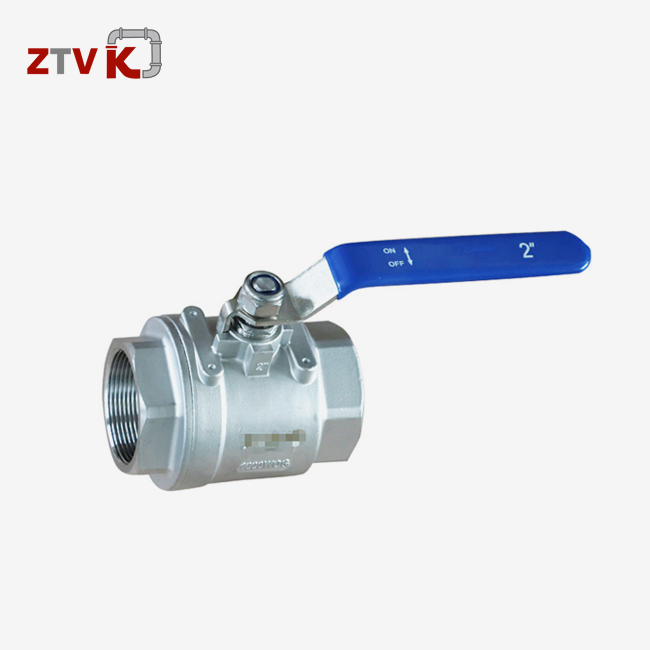
Gate valves have a smaller pressure drop, but they take longer to open and close and take up more room when they are installed. Ball valves shut off bubble-tight, but they stop flow quickly, which makes water hammer worse. Butterfly valves are the best of both worlds when it comes to irrigation uses. They have small sizes and can be used to control the flow rate. The following table shows a summary of the pressure capabilities:
- Valve Type | Typical PN Range | Flow Characteristic | Installation Length
- Butterfly | PN10-PN25 | Proportional | Shortest
- Gate | PN10-PN40 | Linear | 2-3x butterfly
- Ball | PN16-PN63 | Quick-opening | 1.5x butterfly
Procurement Quality Verification
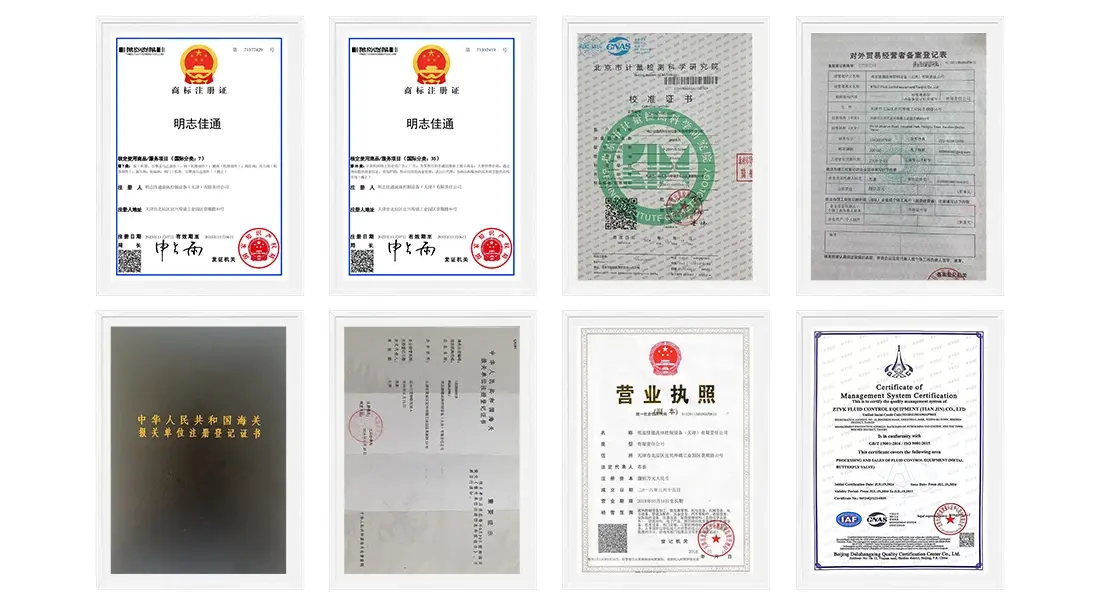
Manufacturer certifications show that materials can be tracked and that testing rules are followed. We keep our ISO9001, ISO14001, and OHSAS18001 certifications up to date and can give you mill test results for body casts if you ask. The product datasheets should list the API 598 or EN 12266-1 requirements for seat leaking rates and hydrostatic test pressures, which are usually 1.5 times the PN value. Because our production sites are only 50 km from Tianjin Port, we can quickly send samples to customers for testing to make sure they are happy before full production runs start.
Installation and Maintenance Best Practices Related to Nominal Pressure
Alignment with System Design Parameters
Making sure that the pipeline pressure ratings match or go beyond valve specs is the first step in a proper fitting of an irrigation butterfly valve. Full gasket contact and even bolt torque are needed for flanged connections to keep stress concentrations from happening that could damage the pressure integrity. Our wafer-style design makes it easier to place between ANSI 150 or DIN PN16 flanges. Compared to lug-style options, it cuts assembly time by 40% while keeping the same pressure performance.
The valve shaft should be positioned horizontally in sediment-laden water to prevent debris accumulation in lower bearings. Upstream strainers protect seats from particle impingement that erodes sealing surfaces. We recommend installing pressure gauges immediately upstream and downstream of critical control valves to monitor differential pressure trends that indicate developing maintenance needs.
Routine Inspection Protocols
External inspections are done every three months to look for weeping around the shaft packing gland, which is a sign that the seal is breaking down because of chemical or temperature cycles. Every year, internal inspections check the seat surfaces for damage like scoring, cracking, or coming loose from the retention grooves. ZTVK offers renewable seat designs in DN100 and larger sizes, which lets the valve be replaced in the field without taking it out of the pipeline—a critical feature for systems that cannot accommodate extended downtime.
Troubleshooting Pressure-Related Issues
If the operating torque is too high, it means that the disc and seat are rubbing against each other due to pressure. This is usually caused by going too close to the highest PN rating. This problem can be fixed by adding a pressure regulator upstream or moving up to the next PN class. Sudden drops in pressure during operation are usually a sign of an interior part failing, like a disc coming off the shaft or a seat pushing out of its housing. It is very important to keep safety margins below nominal scores because of these terrible breakdowns.
Conclusion
To choose the right nominal pressure rating for irrigation butterfly valves, you have to weigh the costs and the needs of the system. Most agricultural uses fall under the PN10 and PN16 classifications, which offer dependable service when properly matched to system operating conditions. Choosing the right materials, installing them correctly, and following the right upkeep steps can all help these important flow control parts last as long as they can. Our manufacturing skills in Tianjin's Beichen District include certified quality systems and adjustable production schedules that can meet both standard and unique needs. Being close to major shipping routes makes sure that global distributors always have enough stock without having to wait for long lead times.
Frequently Asked Questions
1. What happens if I exceed the nominal pressure rating?
Going over the PN limits speeds up seal wear and, in the worst cases, could cause the structure to fail right away for an irrigation butterfly valve. When elastomer seats are compressed past their elastic limits, lasting leakage paths are made. Stress builds up in metal parts, which causes wear cracks to spread. When working at 80% of its nominal rating, there is enough safety margin for short-term pressure spikes that happen a lot in pump-fed systems.
2. Can I use a single pressure rating across different irrigation methods?
System division lets requirements be optimised. PN10 valves work effectively in low-pressure drip zones, but PN16 parts are needed for mainline separation points. This mixed method lowers the overall cost of the job without putting safety at risk. When it comes to valve schedules, our sales team helps make sure that the valves match the real working pressures in each system zone.
3. How do I verify pressure compatibility before purchasing?
Ask for official pressure test results that show hydrostatic seat and shell tests at 1.5x and 1.1x nominal rates, respectively. Make sure that the material requirements match the chemistry of your water. For example, chlorinated municipal supplies need different seat materials than raw agricultural well water. ZTVK gives detailed datasheets and sample units for testing to make sure they are compatible before placing large orders.
Partner with ZTVK for Reliable Irrigation Butterfly Valve Supply
Finding a maker with a track record of success is necessary to get irrigation butterfly valves that always meet pressure requirements and arrive on time. ZTVK keeps common PN10 and PN16 versions in stock from DN50 to DN600. Orders are shipped within 3–7 days of being confirmed. Custom specs, such as different seat materials or actuator placement, take 15 to 25 days to finish. Our team helps distributors build their regional market footprint by helping OEMs name and package their products. We offer technical help after the sale as well, including CAD models, installation videos, and troubleshooting tips to keep problems in the field to a minimum. You can email our engineering team at ktec86961886@163.com to talk about your specific pressure needs and get a detailed quote that fits your procurement timeline and volume needs.
References
1. International Organization for Standardization. (2000). Metallic Flanges – Part 1: Steel Flanges (ISO 7005-1). Geneva: ISO.
2. American National Standards Institute. (2017). Valves – Flanged, Threaded, and Welding End (ANSI/ASME B16.34). New York: ASME.
3. American Petroleum Institute. (2009). Valve Inspection and Testing (API Standard 598). Washington, D.C.: API Publishing Services.
4. European Committee for Standardization. (2012). Industrial Valves – Pressure Testing of Metallic Valves (EN 12266-1). Brussels: CEN.
5. Deutsches Institut für Normung. (1991). PN-Designated Flanges and Their Joints (DIN 2501). Berlin: DIN Standards Committee.
6. Irrigation Association. (2020). Agricultural Irrigation Equipment and Systems: Design, Installation, and Management. Falls Church, VA: Irrigation Association Technical Standards.
Send us your valve requirements and our team will provide professional solutions and fast quotations.
RELATED INDUSTRY KNOWLEDGE